
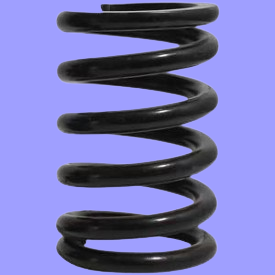
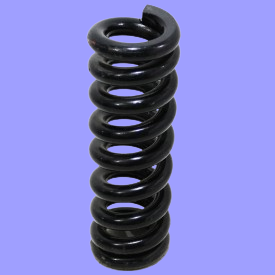
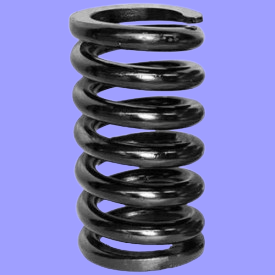
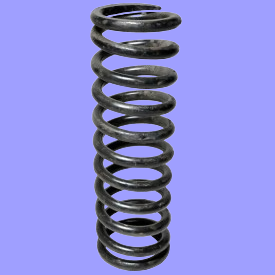
Pipe Support Compression Spring manufacturing capacity :
- Wire Dia. : upto 65 mm.
- Outer Dia. : upto 500 mm.
- Free Height : upto 1000 mm.
- Total Coils : As per user’s requirement.
- Load capacity : upto 40 Tons. (per pc.)
Pipe Support Compression Spring overview :
Pipe Support Compression Spring is an essential components in various engineering applications, particularly in pipe systems where they play a critical role in load distribution and vibration dampening. These Springs are designed to operate under compressive loads, allowing them to effectively absorb and manage the forces exerted on piping structures. Typically constructed from high-quality materials such as stainless steel or carbon steel, their durability ensures longevity and resistance to deformation over time.
The design of Pipe Support Compression Springs involves a coiled structure that provides resilience and elasticity. When a load is applied, these Springs compress and subsequently return to their original shape once the load is removed, thus maintaining system integrity and balance. This characteristic makes them invaluable in applications where dynamic loads are common, such as in industrial piping systems, HVAC units, and plumbing installations.
Functionally, Pipe Support Compression Spring helps mitigate the risks associated with mechanical stress and thermal expansion. Without these Springs, pipes could sag or buckle due to the weight of the liquid they carry or variations in temperature. Furthermore, they assist in maintaining proper alignment of piping systems, preventing misalignment that can lead to leaks or system failures. Various designs and specifications, including diameter, wire thickness, and Spring tension, are available to cater to specific loading conditions and environmental factors, ensuring optimal performance.
Applications of Pipe Support Compression Spring :
Pipe Support Compression Spring plays a crucial role in numerous industries, providing both structural integrity and flexibility. In the oil and gas sector, these Springs are commonly found in pipelines where they help accommodate thermal expansion and contraction of the pipes. For instance, during temperature fluctuations, the springs allow for movement while maintaining the elevation needed, thus preventing pipeline stress that could lead to leaks or breaks.
In water treatment plants, Pipe Support Compression Springs are utilized in various support systems where pipes carry water at different pressures. Here, they offer necessary support to the extensive piping networks, ensuring that structural stability is preserved even amidst the dynamic changes in pressure. This application is vital to prevent pipe misalignment, which could compromise the water treatment process.
Furthermore, HVAC systems often employ Pipe Support Compression Spring to manage vibrations and mechanical movements. In this setting, the Spring acts as a buffering mechanism to absorb shocks from air conditioning units or boilers, ensuring that the piping remains properly aligned and functional. This application not only maintains efficiency in thermal regulation but also enhances the longevity of the overall system.
In the automotive industry, Pipe Support Compression Spring find a significant role in exhaust systems where they support various components under thermal and mechanical loads. They allow for free movement of exhaust pipes, ensuring they expand and contract without any hindrance, thus improving engine efficiency.
Benefits of using Pipe Support Compression Spring :
Pipe Support Compression Spring offer a variety of advantages that are essential for the functionality and longevity of piping systems. One of the primary benefits is vibration reduction; these Springs effectively dampen vibrations caused by fluid flow or external factors. By minimizing oscillations, Compression Springs can help maintain the integrity of the piping system and reduce wear and tear on components.
Another significant advantage is load absorption. Pipe Support Compression Springs are designed to accommodate and distribute applied loads, ensuring that the piping system remains stable under different conditions. This feature is particularly important in environments where pipes are subject to thermal expansion, dynamic loading, or other stressors. Properly utilized Compression Springs can prevent misalignment and even failure of the piping system, thereby extending its operational lifespan.
Stability is yet another critical benefit of employing Pipe Support Compression Spring within pipe support systems. These Springs help maintain precise alignment of pipes, which is crucial for preventing leaks and ensuring optimal flow rates. Their ability to adapt to shifting loads allows for a more resilient support structure, especially in industrial applications where conditions can rapidly change.
Ease of maintenance is a further advantage that should not be overlooked. Pipe Support Compression Springs are relatively simple components to install and replace, which can lead to reduced downtime during maintenance activities. Moreover, the overall cost implications of using these Springs can be positive; while initial investment may be required, the prevention of potential failures and leaks can lead to substantial savings in both repair costs and operational interruptions. In conclusion, the incorporation of pipe support compression springs provides numerous advantages that enhance the effectiveness and sustainability of piping systems.
Choosing the right Pipe Support Compression Spring :
Selecting the correct Pipe Support Compression Spring for pipe support applications is critical in ensuring the integrity and reliability of the entire piping system. Understanding the unique requirements of your application is the first step in making an informed choice. Numerous factors need to be considered, including load requirements, material selection, Spring dimensions, and environmental conditions.
The load requirements refer to the maximum force that the Pipe Support Compression Spring must withstand. It is essential to determine both static and dynamic load specifications to ensure the chosen Spring can handle the anticipated stresses without failing. Underestimating the load capacity can lead to premature wear or failure of the spring, causing potential system malfunctions and costly down times.
Material choices greatly influence the Spring’s performance and lifespan. Common materials for Pipe Support Compression Spring include stainless steel, carbon steel, and various alloys. Stainless steel, for example, offers excellent corrosion resistance, making it an ideal choice for applications in harsh environments. On the other hand, carbon steel is often more cost-effective but may not provide the same level of environmental resistance.
Spring dimensions also play a pivotal role in ensuring proper fit and performance. The diameter, wire size, and number of active coils must be carefully calculated to match the intended use. These dimensions impact the Pipe Support Compression Spring’s ability to compress and recover, thus various calculations based on Hooke’s Law should be performed to ascertain the spring’s functionality in the application.
Lastly, the environmental conditions where the pipe support is situated cannot be overlooked. Factors such as temperature fluctuations, exposure to chemicals, and moisture levels can significantly affect the choice of Pipe Support Compression Springs. Understanding these conditions will guide the decision-making process in selecting Springs that can perform reliably over time and under varying influences.