
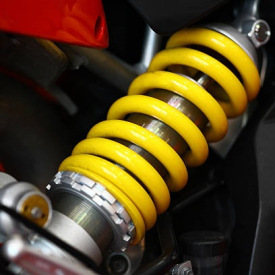
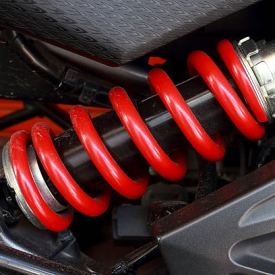
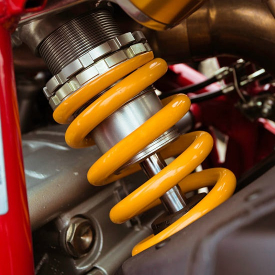
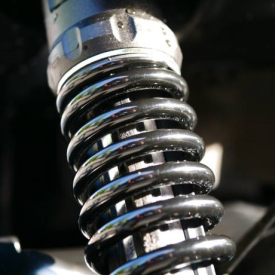
Automobile Compression Spring manufacturing capacity :
- Wire Dia. : upto 65 mm.
- Outer Dia. : upto 500 mm.
- Free Height : upto 1000 mm.
- Total Coils : As per user’s requirement.
- Load capacity : upto 40 Tons. (per pc.)
Automobile Compression Spring definition :
Automobile Compression Spring is a specific type of Helical Spring designed primarily to support and absorb shocks in various automotive applications. Characterized by their coiled shape, these Springs are engineered to compress under load and return to their original length when the load is removed. This fundamental property makes them integral to numerous automotive components, contributing to vehicle stability and performance.
One of the defining characteristics of Automobile Compression Spring is their construction material. Typically, they are made from high-carbon steel, stainless steel, or other alloys that provide a balance of strength and elasticity. These materials enable the Springs to handle significant forces while maintaining durability and resistance to wear and fatigue. The quality of the Spring material plays a pivotal role in the overall performance of the vehicle.
The design and dimensions of Automotive Compression Spring used in automobiles can vary widely based on their intended application. The diameter of the coil, the wire gauge and the number of active coils are essential factors that determine the spring’s load capacity and the extent of its deflection. For example, Springs designed for suspension systems typically have a larger diameter and more active coils to absorb greater shocks compared to those used in lighter applications, such as in electronic components.
Moreover, Automobile Compression Spring can also be differentiated based on their manufacturing process. They might be produced using methods such as cold coiling or hot coiling, which influence their mechanical properties and performance. The precise specification of these Springs ensures they meet the rigorous demands of modern automotive engineering, highlighting their unique place within the broader category of Spring mechanisms.
Functions of Automobile Compression Spring :
Automobile Compression Springs are essential components in various automotive systems, serving multiple functions that enhance the vehicle’s performance and safety. One of the primary roles of Compression Springs is their ability to absorb shocks. This shock-absorbing capability is critical, particularly in automotive suspension systems, where they help to mitigate the impact of road irregularities, thus providing a smoother ride. By compressing under load and then expanding, these springs effectively dampen vibrations, ensuring improved comfort for passengers and maintaining vehicle control.
In addition to shock absorption, Automobile Compression Springs play a crucial role in maintaining the alignment of various automobile components. Proper alignment is vital for the effective operation of vehicle systems, ranging from steering mechanisms to braking systems. For instance, in a vehicle’s suspension system, Compression Springs ensure that components, such as struts and dampers, remain aligned during operation. This alignment is essential for optimal handling and stability, preventing undue wear and tear on parts and reducing the likelihood of mechanical failures.
Furthermore, these Springs contribute to the overall functionality of automobiles by enabling selective load management. In systems where variable loads are applied, Compression Springs adjust in response to these changes, ensuring that vehicle systems such as clutch assemblies and suspension mounts function efficiently. By allowing for controlled movement and adjustments, Compression Springs not only enhance performance but also play a role in ensuring passenger safety. The reliability of components that utilize Compression Springs directly impacts the vehicle’s performance and longevity, underscoring their importance in automotive design.
Common uses of Automobile Compression Spring :
Automobile Compression Springs play a vital role in the functionality and performance of various automobile components. One of their primary applications is found in the vehicle’s suspension system. Here, Compression Springs are crucial in absorbing shocks and maintaining the vehicle’s stability. By compressing during road impacts and returning to their original shape, these Springs ensure that the vehicle can navigate uneven terrains smoothly, significantly enhancing ride comfort and safety.
Another significant application of Automotive Compression Springs occurs within clutch assemblies in manual transmission vehicles. In this context, these Springs provide the necessary force to engage and disengage the clutch plate, allowing for a smooth transition between gears. The reliability and efficiency of clutch performance are largely contingent on the proper functioning of Compression Springs, making them essential for optimal driving experiences.
Furthermore, Automobile Compression Springs are also essential components in various engine components, such as valve Springs. These Springs regulate the timing of the engine’s intake and exhaust valves. By controlling the opening and closing of these valves, Compression Springs directly affect engine performance and efficiency. Their ability to withstand high temperatures and varying loads is critical, ensuring that the engine operates smoothly under different conditions.
Types of Automobile Compression Spring :
Automobile Compression Springs are vital components in automobile engineering, offering various solutions to meet different operational requirements. The automotive industry primarily utilizes three main types of Compression Springs: standard cylindrical Springs, conical Springs, and custom-designed Springs.
Standard cylindrical Springs are the most commonly used type within automotive applications. These Springs are characterized by their uniform coil diameter and length, enabling efficient compression and flexibility in various mechanical assemblies. Standard cylindrical Springs can be found in systems like suspension and engine components, where they serve to absorb shocks and vibrations, enhancing overall ride quality.
Conical springs, also known as tapered Springs, exhibit a design where one end of the coil is larger than the other. This distinct design provides a variety of advantages, particularly in applications requiring compact designs or space optimization. In the automotive context, Conical Springs are often employed in limited space environments, such as within shock absorbers or automotive clutches, where their ability to handle variable load conditions is paramount.
Custom-designed Compression Springs play a critical role by catering to specific needs that standard options might not fulfill. These Springs can be tailor-made according to the unique operational parameters, including dimensions, material composition, coil configuration, and Spring rate. Custom designs allow for enhanced performance in niche applications, ensuring that the spring functions effectively within the designed mechanical system, whether it’s for unique suspension systems or specialized machinery within vehicles.
Each of these types of Automobile Compression Springs exhibits distinct features that make them suitable for various applications in the automotive sector. Understanding the differences and functionalities of standard cylindrical, conical, and custom Compression Spring is essential for engineers and manufacturers in selecting the appropriate Spring type to optimize vehicle performance.
Materials used in Automotive Compression Spring :
One of the most common materials used in Automotive Compression Spring manufacturing is carbon steel. Carbon steel offers a strong balance of durability and affordability, making it an ideal choice for numerous automotive applications. Its high strength allows Compression Springs to withstand substantial loads while maintaining structural integrity.
Another widely used material is stainless steel, known for its excellent corrosion resistance. This property is especially crucial in automotive environments where exposure to moisture and chemicals is common. Stainless steel Springs ensure long-lasting performance, making them an appropriate choice for parts that will be subjected to harsh conditions.
In recent years, composite materials have gained traction as a viable option for Compression Springs. Composites can offer unique benefits, such as a reduced weight and enhanced fatigue resistance, which are essential for modern automotive designs that prioritize efficiency without compromising strength. These materials can also be engineered to exhibit specific characteristics tailored to particular applications.
Design of Automotive Compression Spring :
When engineers design Automotive Compression Spring for automotive applications, several critical factors come into play to ensure the Springs meet performance and safety standards effectively. A primary consideration is the load requirements. Compression Springs must be able to withstand specific forces without permanent deformation. Therefore, calculating the maximum expected load is essential. Engineers often refer to Hooke’s Law, which relates the force exerted on the spring to its displacement, allowing for accurate modeling of the Spring’s performance under varying loads.
Another significant factor is dimensional constraints. The available space in an automobile often restricts spring dimensions. Engineers must work within these limits while also considering the Spring’s free height, coil diameter, and wire diameter. These dimensions greatly influence the spring’s overall performance characteristics, including its Spring rate and fatigue life. Consequently, a well-structured design that includes precise specifications helps create efficient and reliable Automotive Compression Springs.
Environmental factors play a pivotal role in the design process as well. Compression Springs in the automotive industry are frequently exposed to varying temperatures, moisture, and chemicals. For instance, Automotive Compression Spring located near the engine may encounter high temperatures that can alter their mechanical properties. Therefore, selecting appropriate materials that can withstand such conditions is imperative. Additionally, exposure to road salts and oils necessitates the use of corrosion-resistant coatings or materials to extend the Springs’ service life. Understanding these environmental challenges enables engineers to create Compression Springs that maintain functionality and durability under real-world conditions.