
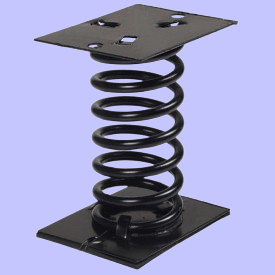
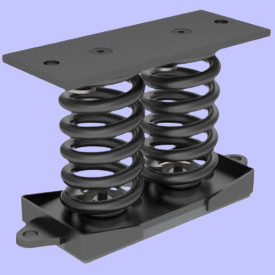
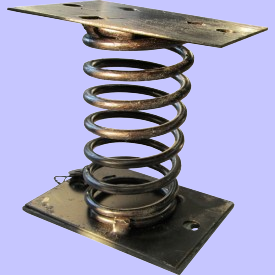
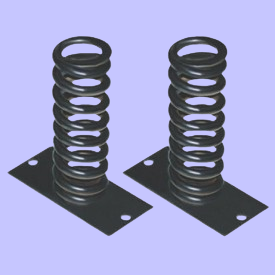
Elevator Compression Spring manufacturing capacity :
- Wire Dia. : upto 65 mm.
- Outer Dia. : upto 500 mm.
- Free Height : upto 1000 mm.
- Total Coils : As per user’s requirement.
- Load capacity : upto 40 Tons. (per pc.)
What is an Elevator Compression Spring :
An Elevator Compression Spring is a vital component utilized in the operation of Elevator systems. These Springs are specially designed mechanical devices that store and release energy as required during the lifting and lowering of the Elevator car. When compressed, the Spring exerts a force that helps counterbalance the weight of the Elevator, ensuring smooth and efficient vertical movement.
Typically constructed from high-quality steel or other durable materials, Elevator Compression Springs exhibit remarkable elasticity and tensile strength. The design of these Springs often features tightly wound coils that allow for significant compression while retaining their structural integrity. The number of coils, wire diameter, and overall dimensions can be customized based on individual requirements of the Elevator system, ensuring optimal performance under varying loads.
The functionality of an Elevator Compression Spring is dependent on its ability to convert potential energy into kinetic energy and vice versa. As the Elevator car ascends, the Spring compresses, storing energy that is released to facilitate a controlled descent. This mechanism not only enhances the safety of the Elevator system but also contributes to its operational efficiency by reducing strain on the motor. Manufacturing processes for Elevator Compression Springs involve precision techniques such as cold coiling, heat treatment, and surface finishing, which further improve their resilience and longevity.
How Elevator Compression Spring works :
Elevator Compression Spring is integral components of an Elevator’s mechanism, functioning primarily to store and release mechanical energy essential for the elevator’s operation. These Springs leverage Hooke’s Law, which asserts that the force exerted by a Spring is directly proportional to its displacement. When an Elevator descends, the gravitational force exerts a load on the Spring, compressing it. During this compression, the spring stores potential energy, which is crucial for the efficient and safe operation of the Elevator.
As the Elevator begins its ascent, the stored energy in the Compression Spring is released. This release occurs as the Spring expands back to its resting state, generating a force that helps lift the elevator cab. This mechanism provides greater energy efficiency compared to direct lifting methods and reduces the reliance on motor power alone. The balance of forces – gravity acting on the Elevator weight and the opposing force from the Spring – is essential during operation. Properly calibrated, these Elevator Compression Spring ensure a smooth start and stop, minimizing jerkiness and enhancing passenger safety.
Moreover, Elevator Compression Springs contribute to the overall stability of the lift system. They dampen oscillations and vibrations caused by sudden changes in speed or external forces, ensuring that the Elevator cabin remains level during operation. This is particularly important as safety standards necessitate that any movement is controlled and predictable for passenger comfort. Therefore, understanding how Elevator Compression Springs work is vital for maintenance and design considerations in modern Elevator systems. Properly functioning Compression Springs enhance not only the operational effectiveness but also the longevity of the elevator’s components.
Application of Elevator Compression Spring :
Elevator Compression Springs are critical components that facilitate the smooth operation of various types of Elevators. Primarily utilized in passenger Elevators, these Springs help in counterbalancing the weight of the Elevator cabin. By providing necessary tension, they enable efficient lifting and lowering mechanisms, ensuring that the Elevator operates safely and reliably. The design of Elevator Compression Springs allows them to withstand significant loads, thus making them integral in systems that prioritize passenger safety and comfort.
Freight Elevators, which are designed to transport goods rather than passengers, also benefit from the use of Compression Springs. Their ability to handle heavier weights is crucial in these applications. The Elevator Compression Spring works in conjunction with other Elevator components to absorb dynamic loads that occur during transportation, thereby enhancing the longevity and performance of the freight Elevators.
Service Elevators, often found in hotels and commercial buildings, similarly rely on Elevator Compression Spring. These Springs are essential for managing the weight of the Elevator while it is in operation, directly impacting the loading and unloading process. Their adaptability and efficiency significantly contribute to the effective functioning of service Elevators, where the swift movement of goods and maintenance equipment is paramount.
Importance of Elevator Compression Spring :
Elevator Compression Spring plays a pivotal role in ensuring the safe and efficient operation of Elevator systems. These vital components are integral to the functionality of Elevators, acting as a mechanism that absorbs shock and provides the necessary counterbalance to the weight of the Elevator car. Their performance directly influences the safety and reliability of Elevator operations, making their importance indisputable.
One of the primary functions of Elevator Compression Spring is to ensure a seamless and smooth movement of the Elevator. They assist in dampening vibrations and shocks that can occur during the ascent or descent of the Elevator. By doing so, these Springs help to maintain stability and comfort for passengers, which is crucial, especially in high-rise buildings where the Elevator systems are subjected to varying loads and frequent usage.
Moreover, the failure of Elevator Compression Springs can lead to catastrophic consequences. A compromised Spring can result in sudden Elevator stoppages or uncontrolled descents, posing significant safety risks to passengers. The malfunction of these components not only endangers human lives but can also lead to costly repairs and extended downtime, thereby affecting the overall efficiency of the building’s operations.