
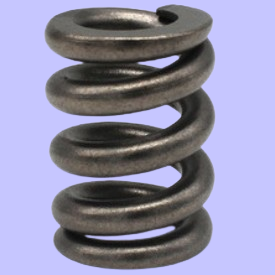
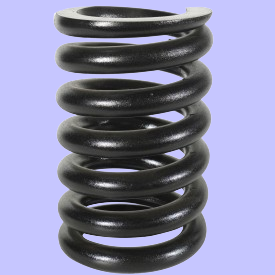
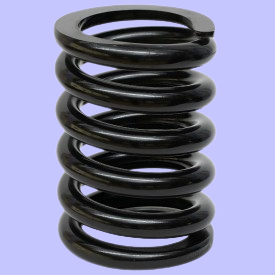
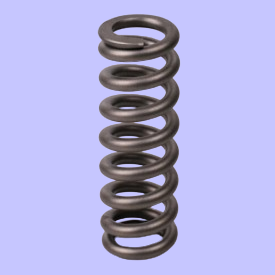
Valve Compression Spring manufacturing capacity :
- Wire Dia. : upto 65 mm.
- Outer Dia. : upto 500 mm.
- Free Height : upto 1000 mm.
- Total Coils : As per user’s requirement.
- Load capacity : upto 40 Tons. (per pc.)
Know about Valve Compression Spring :
A Valve Compression Spring is a mechanical component specifically designed to exert force in a linear motion and maintain a specific position under compressive loads. These Springs play a crucial role in various Valve systems by ensuring that the Valve operates smoothly and efficiently. Their primary function is to provide a counteracting force to the Valve’s moving parts, ensuring that they return to their original position after being actuated.
Typically, Valve Compression Spring are cylindrical in shape, which allows for uniform distribution of stress across the Spring when compressed. The physical characteristics of these Springs are determined by several factors, including their material, diameter, wire thickness and overall length. Common materials used for manufacturing Valve Compression Spring include high-carbon steel, stainless steel, and music wire, all of which offer strength and durability to withstand repetitive mechanical stress.
The dimensions of Valve Compression Spring can vary widely to suit different applications. Standard sizes can range from small, lightweight Springs used in miniature valves to large, heavy-duty Springs employed in industrial Valve systems. In addition to the standard designs, customized Valve Compression Springs can be created to meet specific operating conditions or requirements, offering a tailored solution for unique applications.
How Valve Compression Spring function :
Valve Compression Springs are integral components within Valve assemblies, serving the critical function of controlling the opening and closing of the Valve. Their operation is anchored in the principles of force and compression, which dictate how effectively a Valve responds to various conditions. Understanding these mechanics is essential for grasping their importance in multiple applications.
At the heart of a Valve assembly, the Valve Compression Spring exerts a force that counters external pressure exerted during the valve’s operation. When a Valve is in a closed position, the Spring holds it securely against the seat, preventing any unintended flow. The Spring’s tension, which arises from its design and material composition, is pivotal in determining how quickly and efficiently the Valve opens and closes. When the actuator applies force to initiate Valve movement, the Spring is compressed, storing potential energy that is released when the Valve is being closed.
The amount of compression directly influences the force exerted by the Spring, which in turn affects the closing speed and pressure resistance of the Valve. A Valve Compression Spring with insufficient tension may lead to premature Valve failure or leakage, as it may not effectively seal the Valve seat when closed. Conversely, overly stiff Springs can hinder Valve operation due to excessive force required to compress them. Therefore, achieving the right balance of Spring tension is essential for optimal Valve performance.
Why a Valve Compression Spring necessary :
Valve Compression Springs play a pivotal role in a wide range of machinery and devices, serving crucial functions that ensure operational efficiency and mechanical reliability. These Springs are specifically designed to manage the pressure exerted on Valves, thereby assisting in the controlled opening and closing of these components during operation. Without Valve Compression Spring, the Valves could either fail to open or close entirely, leading to significant malfunctions within the system.
The absence of these Springs could result in mechanical failures, where the inability to regulate the pressure and flow would compromise the functionality of the equipment. For example, in automotive engines, Valve Compression Spring maintain the correct timing for Valve operations, which is critical for optimal engine performance. Failure to incorporate Springs can lead to miss alignments, inefficient combustion, and ultimately, engine damage or complete failure.
Moreover, the presence of these Valve Compression Spring contributes significantly to the overall reliability of systems. They undergo repetitive cycles of compression and extension, which not only absorb shocks from operational stresses but also facilitate a smooth transition between different system phases. This reliability reduces the risk of wear and tear on other components, thereby enhancing the longevity of the machinery. Additionally, effective Spring design can contribute to system efficiency by ensuring that the mechanical energy is utilized properly, resulting in reduced fuel consumption and minimization of energy wastage.
Choosing the appropriate Valve Compression Spring :
Selecting the right Valve Compression Spring is crucial for ensuring optimal performance in various applications. A number of factors should be taken into consideration when making this selection. One of the primary considerations is the load rating of the Spring, which defines the maximum weight that the spring can effectively support without yielding or deforming. It is important to choose a Spring with a load rating that matches the specific requirements of your application to prevent premature failure or subpar performance.
Another important factor in selecting a Valve Compression Spring is the spring rate. This rating indicates the stiffness of the Spring and determines how much the Spring compresses under a given load. Choosing a Spring with the appropriate Spring rate is essential, as it affects the responsiveness and overall behavior of the Spring in the Valve assembly. If the Spring rate is too high or too low, it could lead to inefficiencies in the operation, negatively impacting the entire system.
Moreover, the environmental conditions in which the Spring will operate must also be taken into account. Factors such as temperature, humidity, and exposure to corrosive substances can significantly influence the material selection and coating of the Spring. For instance, if a Valve Compression Spring is to be used in a high-temperature or corrosive environment, it is advisable to opt for materials that can withstand these conditions, such as stainless steel or specially coated Springs.
Maintenance and care for Valve Compression Spring :
Maintaining Valve Compression Spring is crucial for ensuring their longevity and optimal performance in various applications. Regular inspection and proper handling can prevent premature failure and maintain efficiency in systems that rely on these components.
Firstly, routine inspections should involve visually examining the Valve Compression Spring for any physical signs of wear such as rust, cracks, or deformation. Any discoloration or surface damage can indicate deterioration, which may compromise the Spring’s functionality. It is advisable to use a magnifying glass to check for subtle signs that are not easily visible to the naked eye. Additionally, measuring the Spring’s dimensions against the manufacturer’s specifications can help identify any changes that could indicate wear.
Signs of wear include a decrease in Spring force, unusual noise during operation, or a change in the observed mechanical behavior when the Spring is activated. If any of these symptoms are noticed, the Spring should be replaced promptly to avoid larger mechanical failures that might occur as a consequence of compromised Springs. Furthermore, maintaining the correct operational environment is essential; Valve Compression Spring should be shielded from extreme temperatures and corrosive environments, which can accelerate wear.
Proper storage is another important aspect of Valve Compression Spring care. When not in use, Springs should be stored in a dry, climate-controlled area to prevent moisture-related damage. It is advisable to avoid stacking springs directly on each other to prevent deformation; instead, Springs should be stored in a way that respects their shape and allows for air circulation. Handling should also be done with care; using the appropriate tools to install or remove springs can prevent unnecessary stress that might lead to permanent damage.